SOLUTIONS
Four industries, four approaches
The same process problem has different answers in different industries. Here is what we typically build in our four main markets.
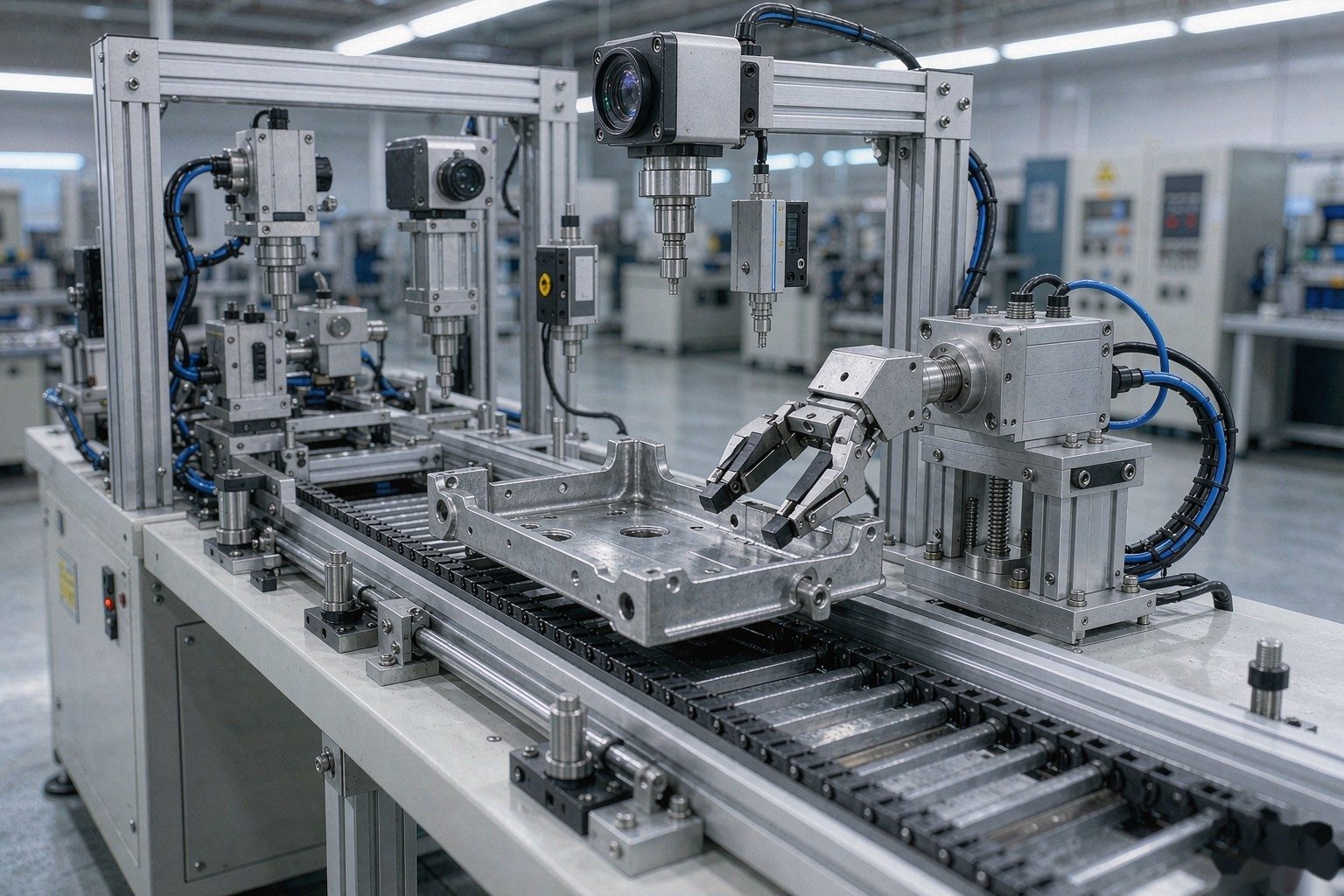
Automotive: assembly and inspection in one line
High volume, full traceability. We chain screwing, pressing, leak test and vision into one short-cycle line that logs torque, force and displacement curves per part and pushes them to MES.
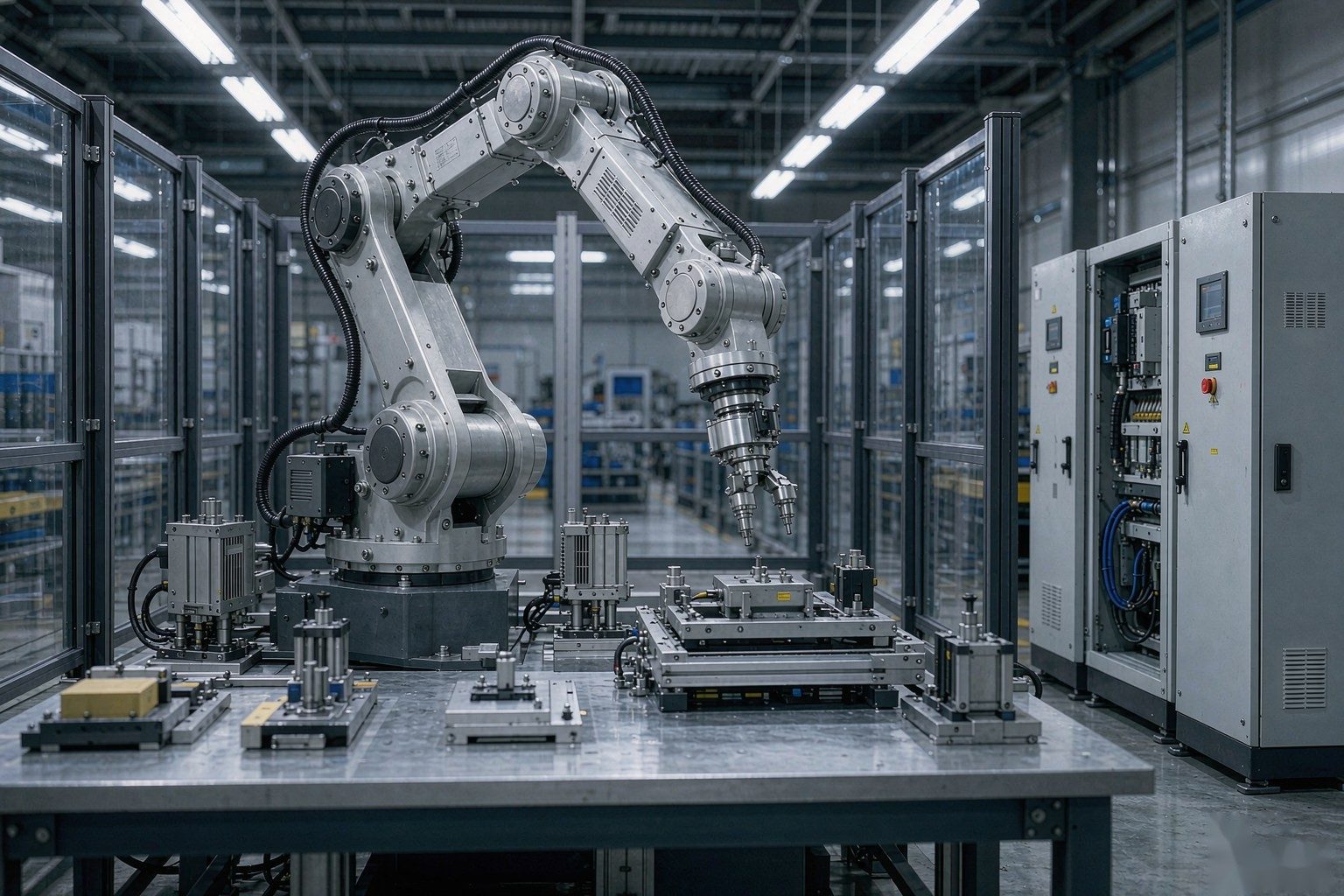
Robotics: flexible machine tending
For high-mix low-volume, a fixed machine rarely pays. A six-axis robot with quick-change grippers and vision guidance covers many part numbers — changeover means a new program and gripper.
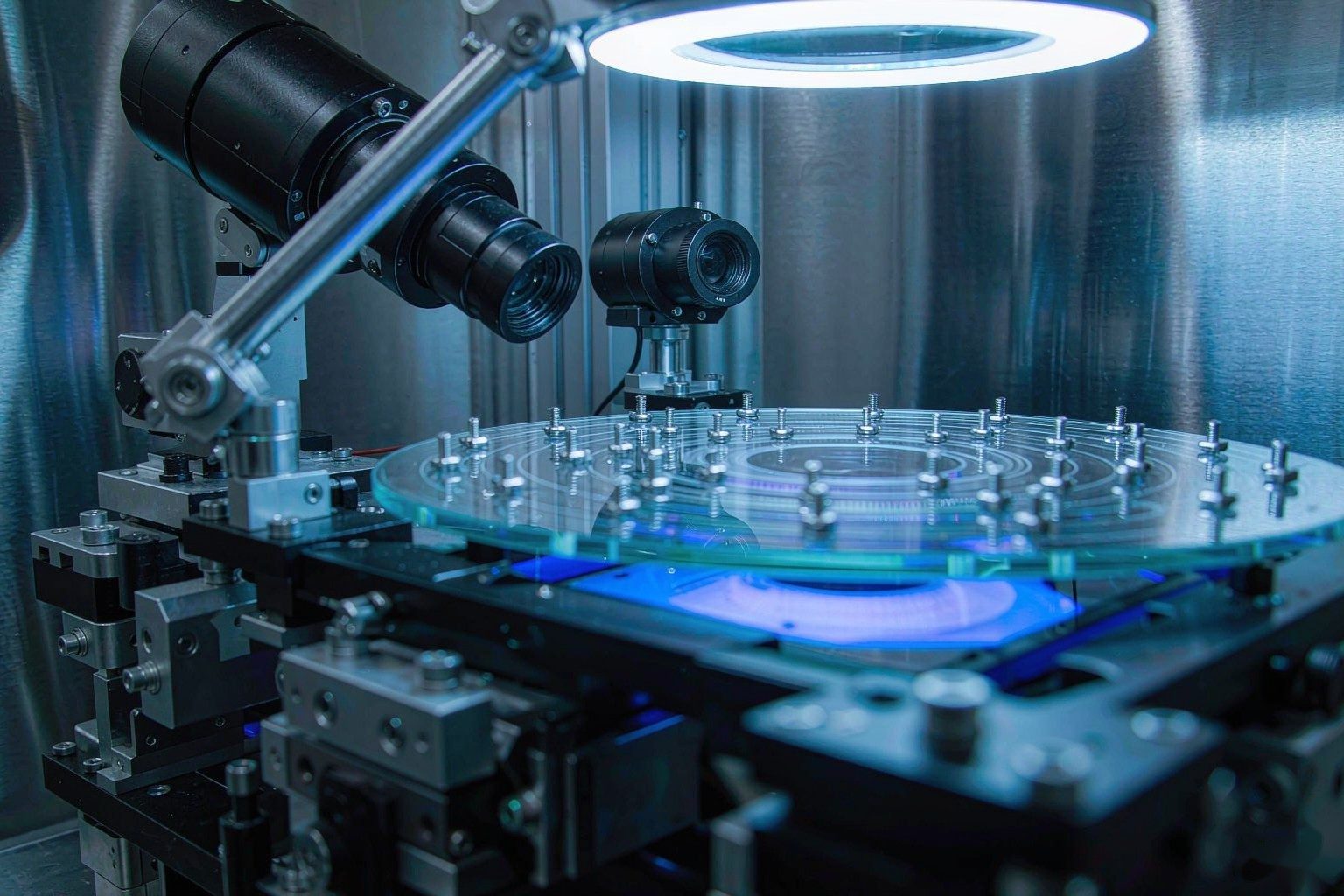
Vision: replacing human visual inspection
Defects, dimensional drift and mixed parts will eventually slip past any operator. Glass turntable plus multiple cameras image six sides at once, reject NG parts and archive the defect image.
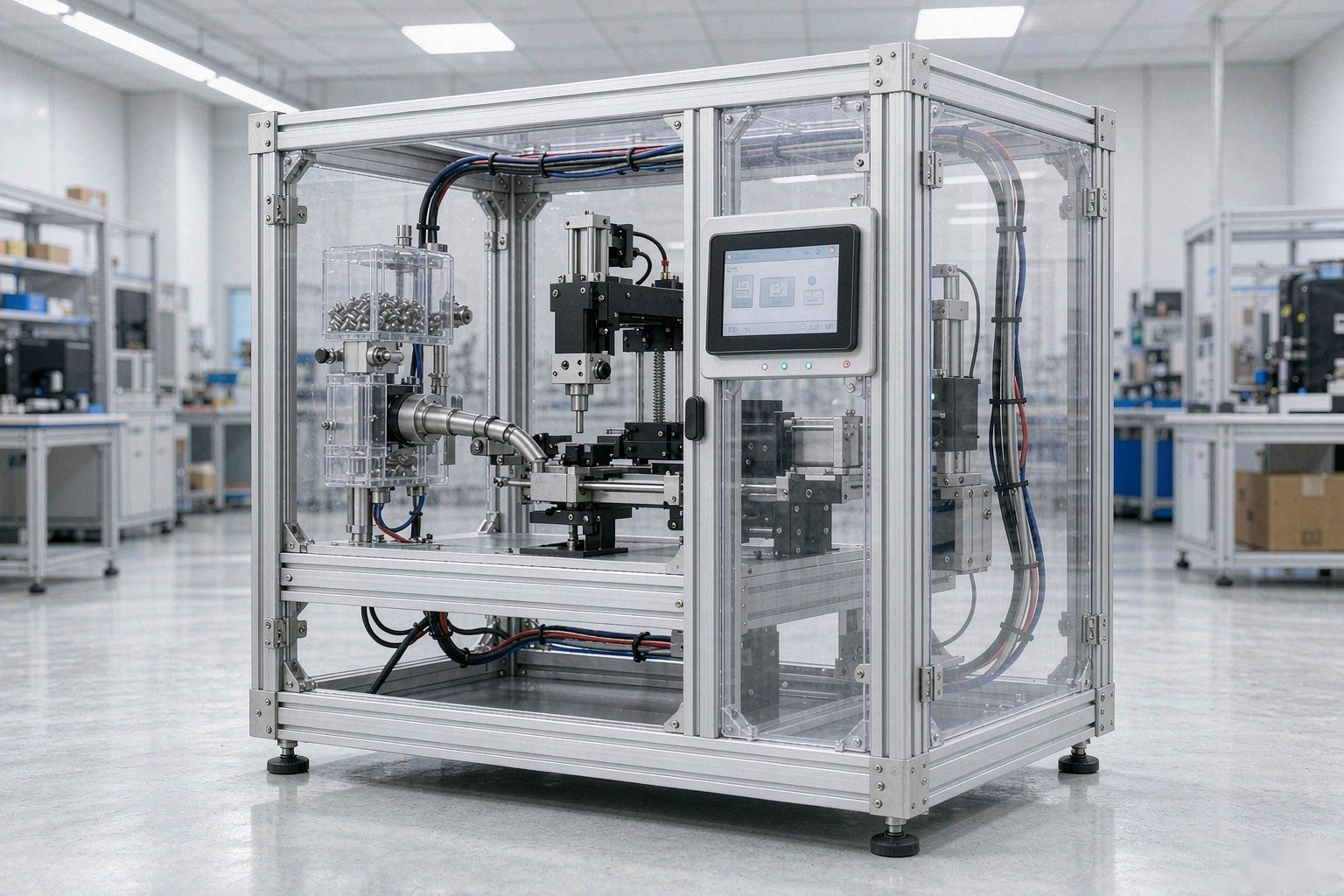
General industry: small spend, fast payback
Not every process justifies a full line. For dispensing, soldering, labelling or screwing, one machine can replace 2–4 operators and often pays back within a year.
 Chongqing WideBean Technology Co., Ltd.